

Exclusively for the China Council for International Cooperation on Environment and Development (CCICED), Dimitri de Boer, Director for China of ClientEarth and a CCICED Special Advisor, and Anders Hove, Senior Research Fellow in the China Energy Research Programme of the Oxford Institute for Energy Studies, dig deeper into the recent narrative that China is “saving the world’” from the current oil crisis, and explore its effects on the global energy transition.
A central theme of CCICED is the role China can play in the global green transition. This year, CCICED’s High-Level Task Force and several Special Policy Studies are also assessing how environmental progress and climate action are affected by factors such as geopolitical conflicts, major-power competition, and concerns over energy security, even as declining costs of green technologies and the emergence of new energy systems are making solutions more readily available than ever before.
Since March of this year, the world has been coping with the biggest oil and gas supply disruption by volume in history, according to the International Energy Agency, caused by the effective closure of the Strait of Hormuz. Headline articles in major publications, including The Economist, argue that China is “the new OPEC”, in the sense that it now has the ability to greatly influence the global price of oil by adjusting its own demand. These articles tend to focus mostly on the dynamics of the oil market and the macroeconomic implications for other countries.
We believe this overlooks an even more important reality: China is proving that green technologies are already an effective counterweight to global energy crises. That is true for countries, but also for big businesses and even for individual households.
“Green technologies are already an effective counterweight to global energy crises. That is true for countries, but also for big businesses and even for individual households.”
Let’s Begin by Looking at the Oil Market
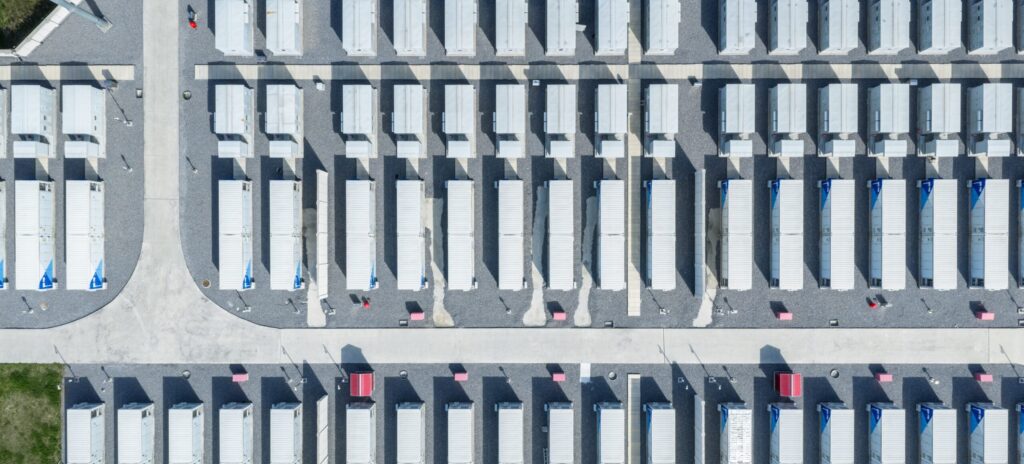
China is more resilient to oil price volatility than other major economies, especially compared to past global oil price shocks. Many international energy analysts were initially puzzled by the magnitude of China’s import cuts. Crude imports declined 30% year-on-year in the second quarter of 2026, an astonishing move for the world’s largest oil-importing country. China’s ability to draw on its large storage capacity, along with lower refinery runs, can explain much of the reduction in crude imports. Demand elasticity has also played a role, as many Chinese drivers could opt to reduce reliance on gasoline vehicles and shift to increased use of EVs and public transport.
China’s versatility has undoubtedly played an outsized role in cushioning global oil prices. Yet global oil price volatility has still been significant. American drivers are certainly feeling pain at the pump, and they are hardly alone. Diesel prices in the developing world have shot up—rising 48% in Sri Lanka and 57% in the Philippines.
Within China, a longstanding oil price adjustment mechanism has also resulted in higher oil and gas prices for several months, likely contributing to rising EVs penetration rates even as the country’s domestic car market sales volumes crater. Government intervention has also eased the pressure: China’s National Development and Reform Commission capped gasoline and diesel price increases to limit the impact on consumers. So the “oil price transmission mechanism” is in place, albeit attenuated by this intervention.
In the past, major energy supply shocks, such as the 1991 Gulf War, led to significant supply disruptions and price volatility, but nothing on the scale of the 1970s energy crisis. The mitigating factors in the 1990s and early 2000s were similar to those at work today: strategic reserves and stockpiles that did not exist in the early 1970s, steady diversification of global energy supplies, and, above all, lower oil consumption relative to GDP. These factors already act as shock absorbers, and China is layering new shock absorbers on top.
Higher oil prices and oil price volatility over long periods of time hurt the global economy—but they also have secondary effects.
“China is more resilient to oil price volatility than other major economies, especially compared to past global oil price shocks.”
Now Let’s Look at the Trends in the Main Green Technology Sectors
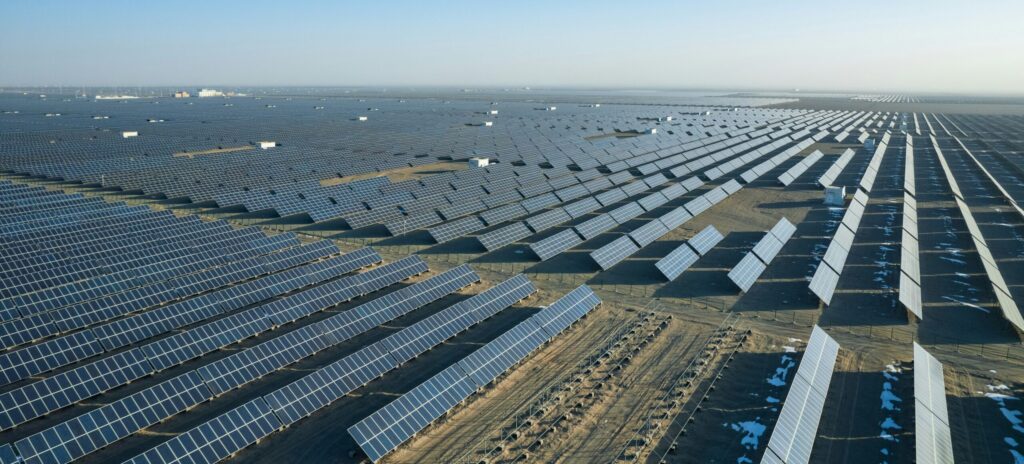
At home, China’s deployment of solar and wind energy continues at breakneck speed. The 15th Five-Year Plan set a target of reaching 2,800 GW of solar and wind energy by 2030, more than double the previous target. For comparison, total installed solar and wind capacity in Europe by the end of 2025 was about 613 GW.
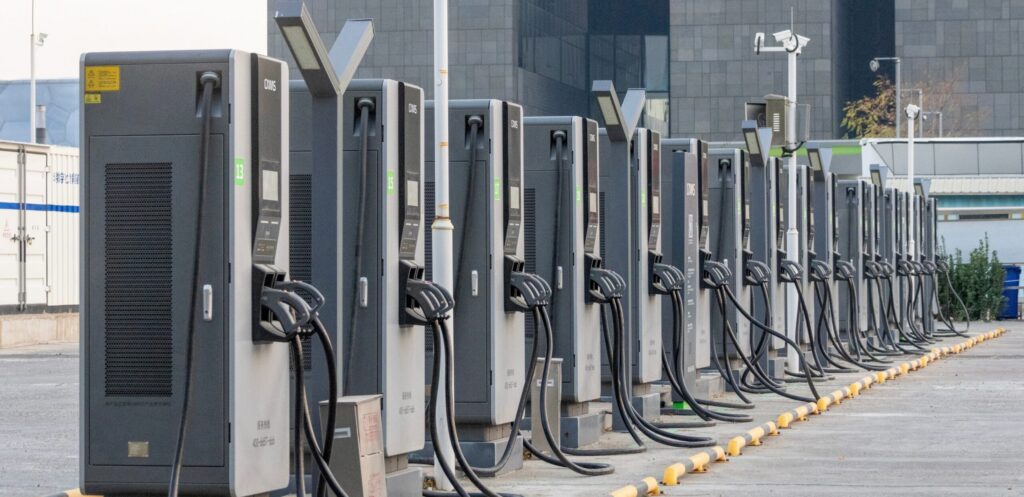
In July 2026, EV sales in China (including battery and plug-in hybrid vehicles) reached almost two thirds of new passenger cars sold, while sales of gas-engine cars crashed by 44% year-on-year.
China’s EV exports are booming too. New energy vehicle exports from China rose 120% in the first half of 2026, after already rising 104% for the full year in 2025, according to the China Association of Automobile Manufacturers.
Trends in South Asia and Southeast Asia show that the oil crisis has not only encouraged consumers to switch to EVs but has also made policy-makers eager to support that transition. Laos cut EV registration fees, set new EV targets, and temporarily banned new gasoline cars; Cambodia cut import tariffs on EVs; and Bangladesh introduced new EV targets.
Electric truck sales are also booming. Reuters reports that China’s e-truck exports doubled over the 4 months following the Iran war, ballooning fivefold for South Asia and tripling for Southeast Asia. Chinese EVs are reaching new markets—with new showrooms displaying Chinese pickup trucks and commercial EVs in Sanaa, Yemen, and EV-powered heavy construction equipment helping build a new international airport in Ethiopia. The EV transition in these places will further reduce the impact of future oil price shocks—but the transition itself is being accelerated by the real price shock underway now.
Chinese exports of solar panels to Africa surged in the 12 months to June 2026, according to Ember, a think tank. They estimate solar installations in the continent to reach 17 GW in 2026. 19 countries are seeing year-on-year growth of over 100%, including 544% in the Democratic Republic of the Congo (DRC), 282% in Zimbabwe, 176% in Egypt, and 117% in Zambia. These estimates include decentralised solar power installed on rooftops, which are typically not captured in official statistics. Demand for distributed solar has surged in Africa partly because many countries have unreliable grids, and the use of diesel generators has become more costly even while solar PV and batteries continue to drop in price.
Given the oil shock and the increasingly attractive economics of green technologies, it is hardly surprising that we are witnessing a surge in demand for them, especially in the Global South. This also has major implications for China’s overseas trade and investment.
In the end of 2019, following up on CCICED’s policy recommendations and just before the start of the Covid-19 pandemic, ClientEarth began its cooperation with the Belt and Road International Green Development Coalition (BRIGC) and World Resources Institute towards ‘greening’ the Belt and Road Initiative – that is, moving overseas investment towards clean power and other green investments. The work contributed to the Chinese government issuing an important set of policy documents known as the “Green Development Guidance for Overseas Investments”.
In September 2021, China’s president Xi Jinping pledged to the United Nations General Assembly to step up support for other developing countries in developing green and low-carbon energy, and that China would no longer build new coal-fired power projects abroad. That pledge immediately led to a tremendous drop in coal projects around the world. The support for low carbon energy has taken longer than expected to materialise, but five years on, we can see it is really gaining momentum.
Going Global
More recent advice from CCICED emphasised that in addition to exporting more green technologies, companies should be encouraged to develop partnerships to manufacture overseas. A key line in the opening section of the 2025 CCICED Policy Recommendations to the Chinese government reads:
“An inclusive and mutually beneficial global green supply chain cooperation network should be established, encouraging green industries to accelerate overseas joint ventures and localized operations, thereby sharing the benefits of the green transition.”
The latest edition of the Belt and Road Investment Report 2026 H1, by Christoph Nedopil of the University of Queensland, confirms that this is happening. The BRI was more active than ever in the first half of 2026, especially in green energy, metal processing, and manufacturing. Energy-related engagement in 2026 H1 reached record levels of about USD 36.3 billion, and 56% of that was green—a new record both in absolute and relative terms. Africa and the Middle East were the most active regions. Nedopil notes that these trends are expected to continue, as global trade frictions and fossil fuel price volatility create opportunities for Chinese BRI engagement in green sectors and manufacturing localization.
Many executives at the Chengdu Motor Show in August 2026 also confirmed their intent to further globalize. Lu Fang, chairman of the board of Voyah, a Chinese EV maker, echoed others in his remarks to CGTN: “We need to move from exporting products to exporting an entire ecosystem. That means…also taking our manufacturing capabilities overseas. By producing locally, we can lower costs, shorten delivery times, and better integrate into the local economy.”
The Iran war is not over, and Hormuz shipping is still heavily curtailed. Nobody knows if the present disruption could last into 2027 or beyond. The longer the crisis, the more consumers and governments look to alternatives.
Given China’s position at the forefront of EVs and clean energy, increased global awareness of oil price volatility may have a far larger impact than we can currently estimate. Not only has China reduced the direct impact on its own economy, Chinese exports and overseas partnerships are helping accelerate the global clean energy transition. Perhaps the biggest takeaway is a shift in the meaning of energy security. A higher share of renewables, electrification of transport, and a stake in the green technology supply chains of the low carbon economy, are the ‘new prize’ of this century.
The view expressed in the article are those of the authors and not necessarily those of CCICED.
About the authors
- Dimitri de Boer is a Special Advisor of CCICED, and Director for China of ClientEarth, a non-profit focusing on environmental law
- Anders Hove is Senior Research Fellow in the China Energy Research Programme of the Oxford Institute for Energy Studies